Field note
Pink Beach from a Lombok–Komodo Luxury Cruise: Snorkeling Conditions, Tides, and Photography Tips
Pink Beach Komodo from Lombok cruise guide
Pink Beach Komodo from Lombok cruise guide is exactly what I wish I’d had the first time I sailed from Lombok to Labuan Bajo. The experience is shaped by your route, tides, and how your crew times the stop — and those details matter for both your photos and the reef.
On a typical Lombok to Komodo Luxury Cruise (4D3N Itinerary, Ports & Stops), Pink Beach is not just a quick selfie stop between dragons and manta rays. Done well, it becomes a relaxed swim and snorkel session with a long sandbar of rose-colored grains under your feet, soft afternoon light on the hills, and a shallow reef that still needs all the protection we can give it.
Where Pink Beach fits into a Lombok–Komodo luxury route
First, the logistics, because the phrase “Lombok–Komodo cruise” can mean very different things.
- Departure area: Most luxury and upscale phinisi cruises start with hotel pickup in Senggigi, the wider Mataram/Senggigi area, or transfer guests from the Gili Islands via Bangsal Harbour. Some operators will write “Lombok Harbour” in marketing copy, but the actual dock used is usually Bangsal Harbour on Lombok’s northwest coast.
- Gili connections: If you are based on Gili Trawangan or Gili Air, expect a short local boat over to Bangsal arranged by the operator or by your hotel, then step straight onto the liveaboard.
- Direction: The standard shared route is Lombok → Labuan Bajo, ending in the Flores town that serves as the staging point for Komodo National Park.
- Duration: The most common product is 4 days 3 nights (4D3N) Lombok–Labuan Bajo. The reverse Labuan Bajo–Lombok route is often packaged as 5D4N because of how the schedule and currents work in the opposite direction.
- Vessel type: A traditional wooden phinisi is still the default for shared sailings. Prices depend heavily on cabin type and finish level, but as a realistic range you’re looking at roughly USD 250–860 per person for a shared berth and roughly USD 430–1,000+ per person for private en-suite cabins on higher-end boats.
On a typical Lombok to Komodo Luxury Cruise (4D3N Itinerary, Ports & Stops), Pink Beach is usually scheduled for Day 3 or sometimes very late on Day 2, paired with Rinca or Komodo Island dragon trekking and one or two snorkel locations like Manta Point or Siaba.
Understanding Pink Beach itself: why the sand is (actually) pink
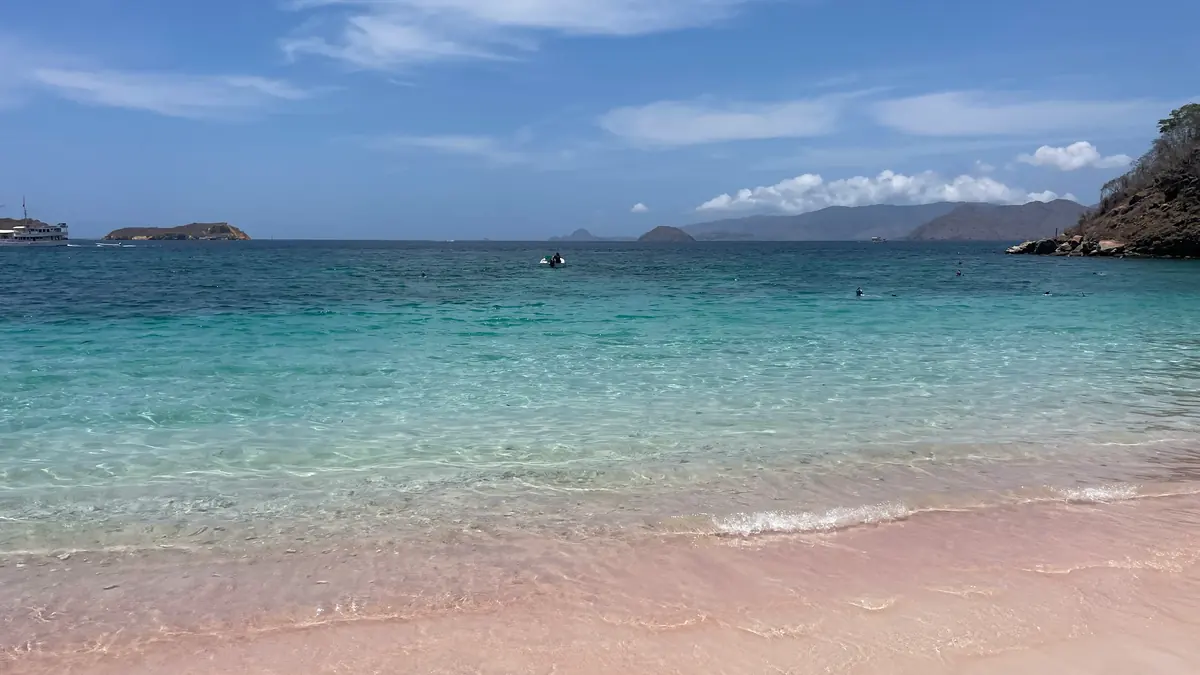
“Pink Beach” is usually used to refer to Pantai Merah on Komodo Island, inside Komodo National Park. There are a couple of other soft-pink beaches in the wider region, but this is the one most Lombok–Komodo routes use.
The pink hue comes from a mix of white carbonate sand (ground from coral and shells) and tiny fragments of red foraminifera, a marine microorganism living in certain corals. When the waves break down those corals just offshore, fragments wash up and mix with the white sand, giving that blush color. You won’t see fluorescent magenta — it’s a soft rose tone, especially visible where the waves leave a wet margin on the beach.
For context on the area and its geology, you can cross‑reference the Komodo National Park entry on Wikipedia or the overview on Indonesia.travel.
Snorkeling conditions at Pink Beach from a Lombok cruise
The question I get most is: “Is the snorkeling at Pink Beach actually good, or is it just for photos?” The answer: it can be very good, but it depends on tide, current, and how crowded it is when you arrive.
What to expect underwater
- Depth profile: Very shallow near the shore (waist-deep) then sloping gradually to 3–8 m depth. Comfortable for beginners who stay close to the sand.
- Reef type: Patch reefs and coral gardens, both hard and soft corals, sea fans, and some rubble in high-use zones. Expect clownfish, parrotfish, wrasse, small schools of fusiliers, and the occasional turtle.
- Visibility: Often in the 10–20 m range on a good day; can drop if the wind picks up or if there’s runoff or swell stirring sand.
- Current: Typically gentle to moderate in the protected bay, but Komodo is a high-current region overall. You still need to listen carefully to your guide about where not to drift.
How Lombok–Komodo timing affects your snorkel
On the 4D3N route, Pink Beach is rarely a dawn stop. Most phinisi boats leaving Lombok will give you island and snorkel time around Satonda, Moyo, or other Sumbawa stops early in the trip, then angle into Komodo National Park with a mix of dragon trekking and reef sites. That often means:
- Late morning arrival: This is common if your group visited Rinca or Komodo dragons at sunrise. Expect higher sun, more boats, and brighter water color but stronger reflections on the surface.
- Mid/late afternoon arrival: Often the sweet spot. The light softens, the crowds thin slightly as day-trip boats head back to Labuan Bajo, and you get more relaxing swim conditions for non‑divers.
For snorkeling quality, both can work, but your best bet is to ask your cruise manager on Day 2: “How are we timing Pink Beach with the tide tomorrow?” On a well-run boat, the answer will include tide and current, not just the lunch schedule.
Tides and the “pink factor”: when Pink Beach looks most photogenic
Pink Beach changes character depending on how high the water is. For photography (and comfort), there are a few windows that work best.
How tide affects the color
- Mid to low tide: Ideal for color. More of the wet, compacted sand is exposed and you get that stronger blush near the waterline. Footprints and trampling are also more visible, which matters for composition.
- Very low tide: Parts of the inner reef and seagrass can become extremely shallow. Good for “walking in water” photos, but you’ll want to be extra careful not to step on coral heads.
- High tide: Less pink sand exposed; more white foam and blue water dominate the image. Nice for snorkeling, but the pink can look subtle in wide shots.
Best light angles from a cruise perspective
Because the 4D3N route is somewhat fixed, you usually don’t have the luxury of choosing any time you like, but you can work with what you get:
- Late morning (10:00–11:30): Best for saturated water color and high-contrast pink. Use a polarising filter or your phone’s “vivid” profile judiciously to cut glare.
- Mid afternoon (15:00–16:30): Better for soft skin tones in portraits, longer shadows on the sand, and layers of pastel blues and pinks. If the captain can anchor slightly off‑center from the crowds, your boat can be part of the frame.
For the strongest “pink,” ask your guide to check the local tide chart the day before you arrive. They’ll usually have offline tides stored or printed. Aim for arriving as the tide is dropping from mid to low if the schedule allows.
Photography tips: how to capture Pink Beach from a liveaboard
On a luxury Lombok–Komodo liveaboard, you have two big advantages that day-trippers from Labuan Bajo don’t: time on deck for elevated angles and fewer rigid clock pressures. Use both.
From the boat
- Use the upper deck: Before the tenders drop you to shore, go up to the sundeck or flybridge. Shoot diagonally across the bay so you get turquoise water in the foreground, the pink strip in the middle, and the hills behind.
- Avoid midday haze: If the sun is high and flat, try a tighter frame on the beach curve rather than a wide landscape to keep contrast strong.
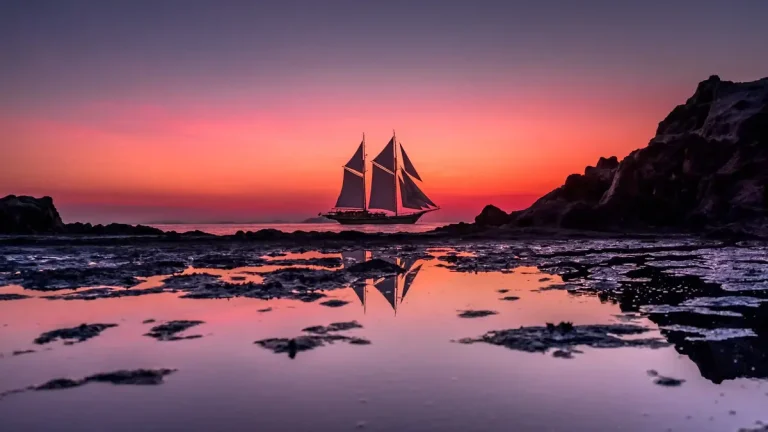
- Include the phinisi: Ask the crew if they can line the hull up behind the curve of the beach for a shot from the tender. A traditional two‑mast silhouette against the green ridges gives more context than sand alone.
On the beach
- Shoot low: Hold your camera or phone 30–40 cm above the sand and angle across the shoreline so the pink grains fill the lower third of the frame.
- Use people smartly: A single person walking along the curve of the beach, small in the frame, does more for scale than a big front‑and‑center portrait.
- Watch footprints: If you want clean sand, walk along the waterline and shoot back toward the area you haven’t walked over yet.
Underwater and split shots
- Action cameras: If you’re using a GoPro or similar, set to a slightly narrower field of view than “SuperView” to minimize distortion of the reef.
- Split shots (half‑above, half‑below): Use a dome if possible, steady your hands, and shoot in bursts. Position the pink sand right at the waterline in the frame.
- Color correction: In shallow water you can often skip filters and fix the blues and greens with a simple “warmth” slider after. If your camera allows RAW, use it.
Conservation etiquette: how not to damage Pink Beach and its reef
Komodo National Park is under pressure: visitor numbers keep rising and many people still stand or sit on living coral for photos. On a luxury liveaboard you’ll usually have guides who brief you, but it helps to know the principles yourself.
On the beach
- Stay above the vegetation line: Don’t trample the low grasses and shrubs on the back of the beach; they stabilise the sand against erosion.
- No sand or shell collecting: Removing sand, coral fragments, or shells is against park regulations, even if “it’s just a little bit.” Those red grains are exactly what create the pink color.
- Respect drone rules: Drone use is regulated and may require permits. Even if allowed, avoid flying low over other visitors or wildlife.
In the water
- Don’t touch coral. Ever. Even a light brush can kill polyps. If you need a rest, float on your back or swim back to sandy shallows where there’s no coral.
- Avoid kicking downwards: Keep your fins near the surface and kick horizontally. Many broken coral branches near shore are from careless fin kicks.
- Choose reef‑safe sunscreen: Apply 30 minutes before entering the water to reduce wash‑off. Wearing a long‑sleeve rash guard reduces the amount of sunscreen you need.
- No feeding fish: It disrupts behaviour and can damage the reef. Good crews will never hand out bread or rice; if someone does, decline.
As operators and guests we share the responsibility for keeping Pink Beach worth visiting. On Luxury Lombok partner vessels, crew are encouraged to say something politely if they see contact with coral or sand collection; support them if they correct someone in your group.
Planning a Lombok–Komodo cruise that treats Pink Beach as more than a photo stop
If Pink Beach is high on your wish list, mention it early in the planning process rather than as an afterthought once you’re already aboard. Here’s how to build it into the trip intelligently.
- Ask how long you’ll have: Some shared itineraries allocate 45–60 minutes total at Pink Beach, others give a more reasonable 90–120 minutes for both snorkeling and sand time. For a relaxed photo session and snorkel, I recommend aiming for the longer stop.
- Confirm it’s the Komodo Island Pink Beach: A few routes occasionally swap in other light‑pink beaches nearby if weather or currents demand it. They’re still attractive, but if you specifically want the classic Pantai Merah curve, clarify that.
- Consider going private or semi‑private: If your budget allows chartering a cabin class on a smaller phinisi or a private motor yacht, you’ll have more control over arriving outside peak hours. That can be the difference between ten boats in the bay and two.
- Build the bigger trip around easy transfers: For a smooth start, most guests overnight in Senggigi, Mataram, Kuta Lombok, or the Gili area the night before departure. From Bali, you can connect via fast boat, flight to Lombok International Airport, or overland + ferry depending on schedule and comfort preference.
If you’d like a route that balances Pink Beach with manta cleaning stations, quieter bays, and comfortable walking trails for dragon viewing, start with the outline on Luxury Cruise from Lombok to Komodo | Luxury Lombok and then fine‑tune dates and boat type.
To plan a trip that hits Pink Beach at the right tide with time to actually enjoy it — rather than sprint through it — you can reach the Luxury Lombok team via WhatsApp on +62 811-3941-4563 with the code . Include your preferred month, group size, and whether Pink Beach snorkeling or photography is your priority, and we’ll help you match that to a Lombok–Komodo sailing that fits.